22 September 2026 • 4 min read
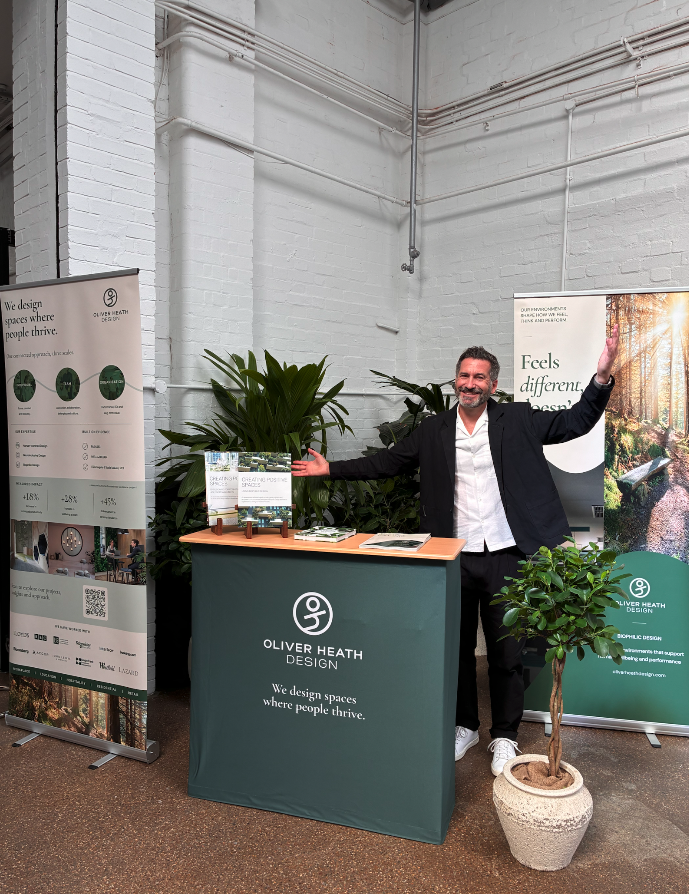
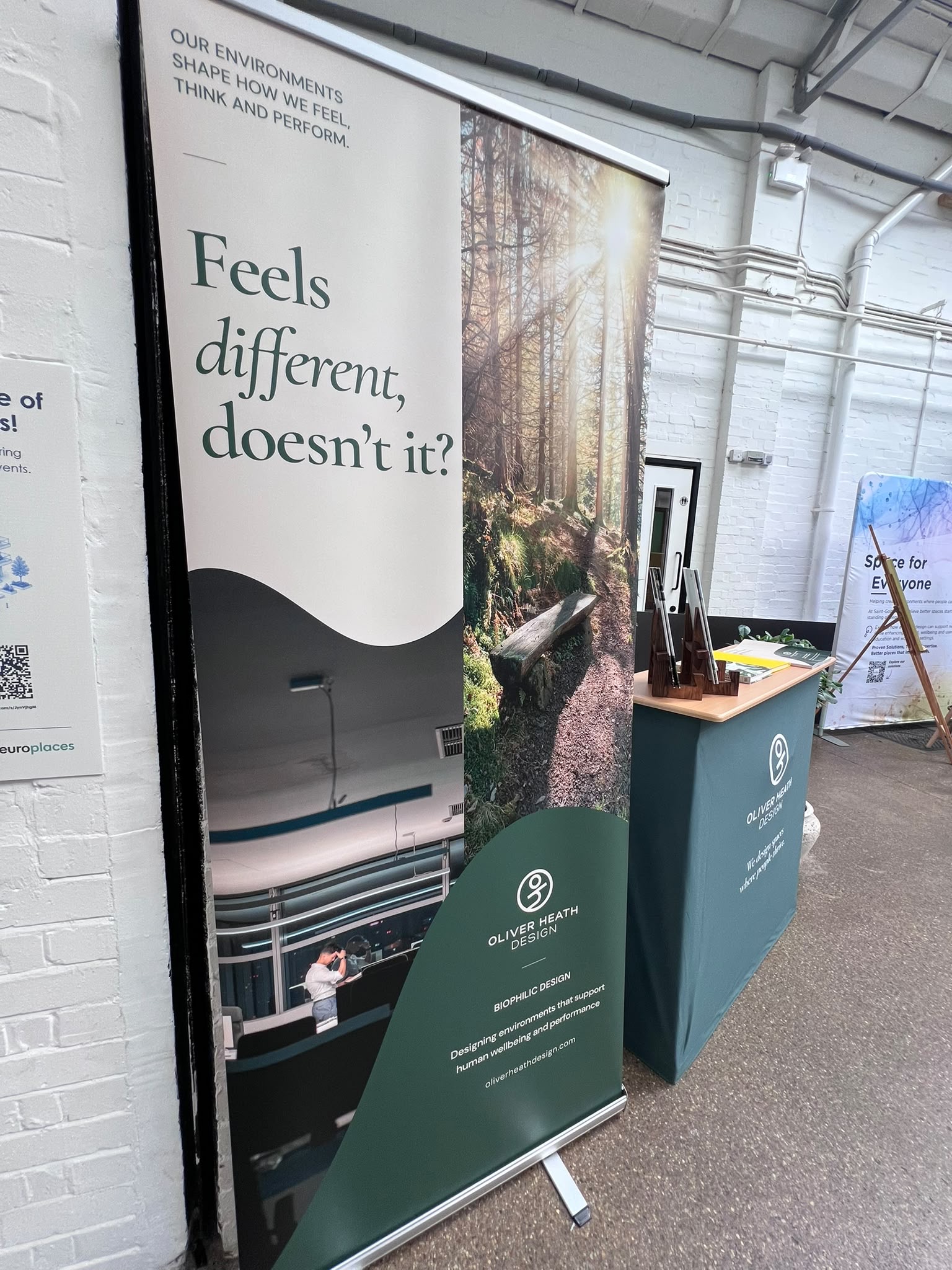
The inaugural NeuroPlaces exhibition at the London Design Festival 2026 brought together an inspiring community of architects, designers, workplace strategists, academics, researchers and wellbeing professionals. All were exploring how neuroscience, nature and design can help create healthier, more inclusive environments. For the Oliver Heath Design team, it was a fantastic opportunity to connect with like-minded professionals who share our belief that design should support human wellbeing.
In his keynote presentation, The Connection with Nature: A Real-World Look at the Growth of Biophilic Design, Oliver explored how biophilic design has evolved beyond the simple introduction of plants to become a broader, sensory-led approach to human-centred design, workplace wellbeing and neuro-inclusive environments.
The presentation highlighted how our connection with nature influences:
Drawing on research and real-world projects, the presentation explored how our evolutionary connection with nature continues to shape how we experience our environments today. It also highlighted why creating a diversity of spaces is essential to supporting the varied sensory needs of modern occupants.
From natural light and materiality to sensory zoning and neurodiversity, the most successful spaces increasingly provide a range of experiences that support different needs throughout the day. Examples include:
It was equally rewarding to hear from fellow speakers and discover the innovative work being undertaken across:
The event highlighted a growing recognition that the built environment has a significant role to play in supporting both people and organisational performance.
A consistent theme throughout the event was that successful environments:
Thank you to everyone who attended the keynote, visited our stand and shared their insights. We're excited to continue these conversations and help deliver biophilic design, neuro-inclusive workplaces and human-centred environments that enable every mind to thrive.
At Oliver Heath Design, creating spaces where people thrive remains at the heart of everything we do.
Neuro-inclusive design acknowledges that people process and experience their environments differently. It seeks to create spaces that support a broad range of sensory, cognitive and emotional needs.
Nature-informed design can support:
These benefits can contribute to healthier and more effective working environments.
The strongest message emerging from the event was that environments perform best when they are designed around human needs. By combining neuroscience, wellbeing and biophilic design principles, organisations can create spaces that better support both people and performance.
The conversations at NeuroPlaces highlighted an important shift within the built environment sector. Design is increasingly being recognised not simply as a matter of aesthetics, but as a powerful tool for supporting:
As our understanding of neuroscience and human-nature connections continues to evolve, so too does the opportunity to create spaces that work better for everyone.
At Oliver Heath Design, we help organisations create healthier, more inclusive and more engaging environments through evidence-based biophilic design. Our work helps clients:
Interested in creating environments that support wellbeing, neuro-inclusion and performance? Get in touch with the team to discuss your project