3% or 53%?
The Neurodiversity Gap Most Employers Can't See

Employers estimated that 3% of their workforce was neurodivergent. Employees put the figure at 53%. Whatever the true figure in your organisation, it highlights a bigger question: are you designing workplaces and buildings around the people who actually use them?

Support dashboard image

Imagine making decisions about a building based on an incomplete picture of the people using it.


That's what makes the gap between 3% and 53% so striking. Not the numbers themselves, but what they reveal. The people using our environments are often more diverse than we assume.

And if our understanding of people is incomplete, what does that mean for workplace performance, employee experience and the success of the spaces we create?
User Access
Billing Information
Invoice Generation

The challenge is not whether human diversity exists.
It's whether our environments support it.

Support dashboard image

People Experience Places Differently


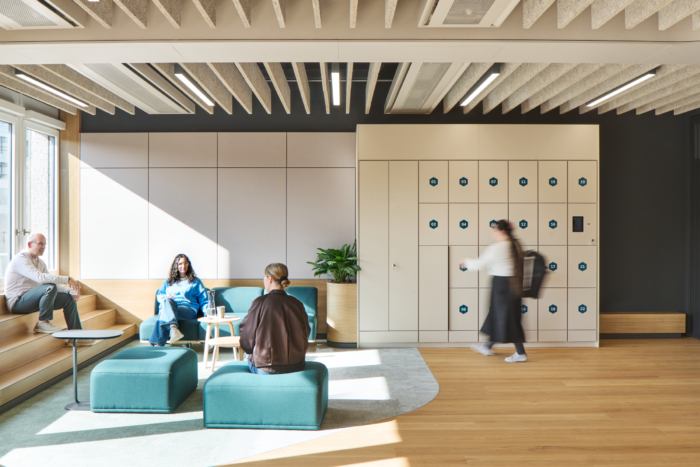
Walk through any workplace and you'll seepeople using the same space in very different ways.

Some seek out activity and interaction. Others look for quieter places to concentrate. Even the same person may need different things depending on the task, the time of day or their energy levels.

This points to a simple but often overlooked truth:

‍There is no single sensory environment that works optimally for everyone, all of the time.

‍
Yet many workplaces are still designed around the idea of an "average" occupant. The trouble is, average occupants don't exist.
User Access
Billing Information
Invoice Generation

When Buildings Don't Work

When a workplace or building isn't supporting the people using it, the signs often appear elsewhere:

- Falling occupancy rates
- Lower staff satisfaction
- Difficulty attracting talent
- Higher employee turnover
- Reduced productivity and cognitive performance
-  Poor user experience

These outcomes are often viewed as people problems. Sometimes they're environmental problems.
User Access
Billing Information
Invoice Generation
Support dashboard image

The Power of Choice

The most successful examples of neuroinclusive design and human-centred design don't try to create one perfect environment.

They create choice.

Quiet spaces for focused work. Collaborative settings for teamwork. Places to pause, restore and recharge. Access to nature, daylight and varied sensory experiences.

These design principles can make a significant difference for neurodivergent individuals and they improve the experience for everyone.

Because everyone performs better when they can choose an environment that supports the task at hand.
User Access
Billing Information
Invoice Generation

Designing for Human Diversity

This principle sits at the heart of PAS 6463 and the wider movement towards inclusive design. The goal isn't to design for a specific group. It's to create environments that support a broader range of human needs.

At Oliver Heath Design, every project aims to improve:
- Sensory comfort Inclusion
- Cognitive performance
- User experience
-  Organisational outcomes

Because when people can thrive, buildings perform better too.
User Access
Billing Information
Invoice Generation
Support dashboard image

Is Your Environment Helping People Perform at Their Best?

If occupancy is low, satisfaction is falling, staff retention is becoming more difficult or a space simply isn't delivering the outcomes you hoped for, the answer may lie in the environment itself.

‍Talk to Oliver Heath Design about creating neuroinclusive, biophilic and human-centred environments that support sensory comfort, cognitive performance and better business outcomes.
User Access
Billing Information
Invoice Generation

Follow us on LinkedIn and Instagram to stay up to date with biophilic design news and resources to help design places where people thrive